

SRI LANKA · FOOD & CULTURE
Discover Sri Lankan Cuisine
Rice and various side dishes, rice flour staples, and the aroma of coconut. Let's learn about Sri Lankan cuisine through photos.
View classic dishes →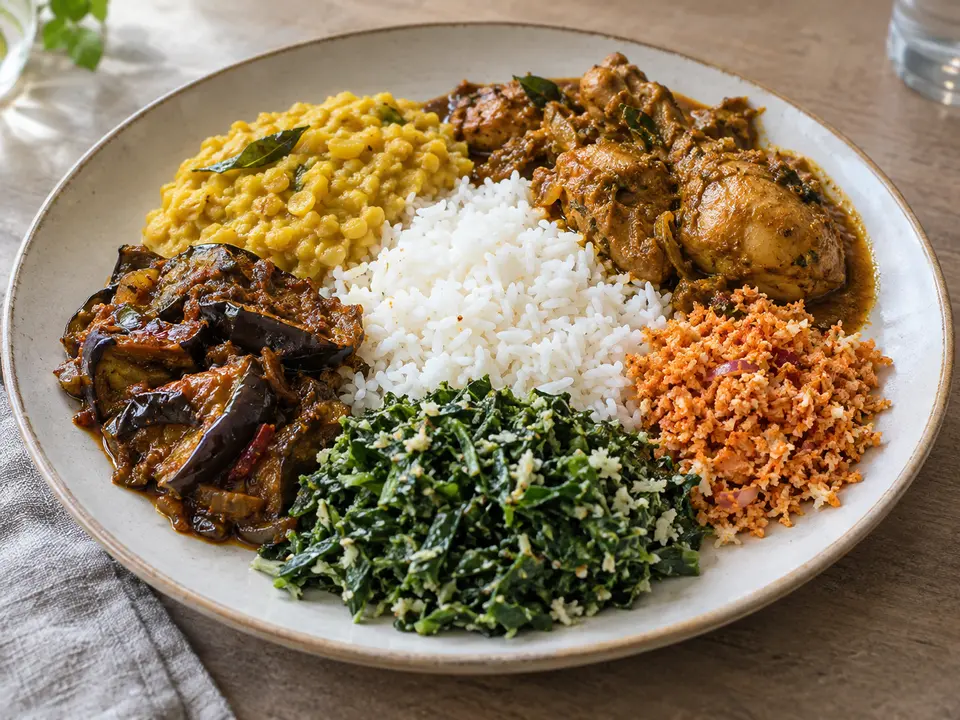
Classic Dishes & Staple Foods
Rice, noodles, and home-cooked meals. Choose what you want to eat from the photos.
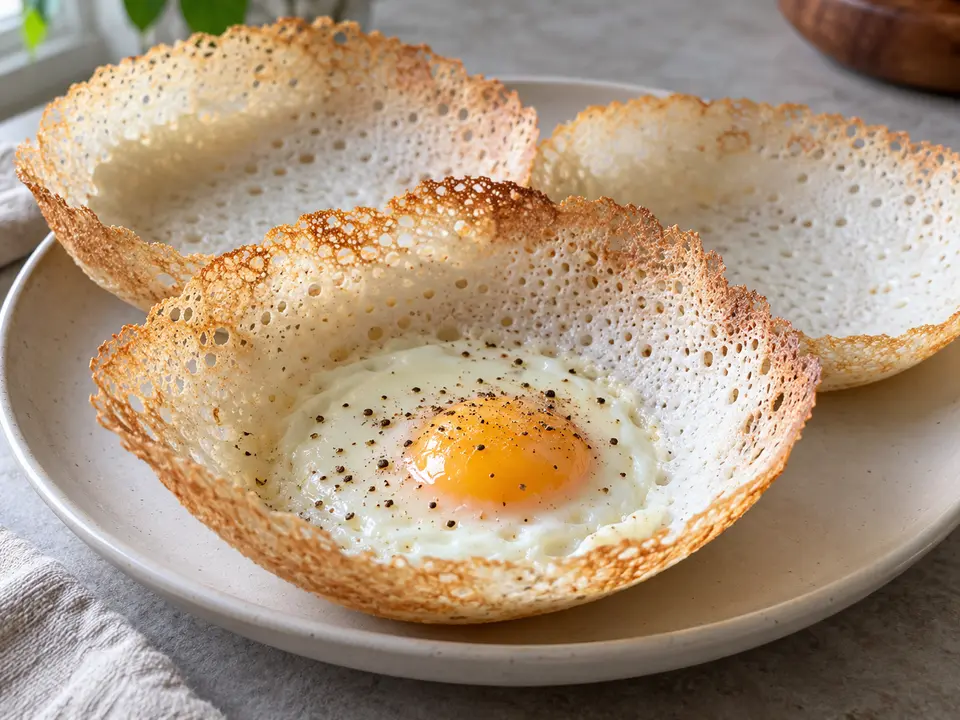
Hopper (Appa)
A dish made by baking a batter of rice flour and other ingredients into a bowl shape. The edges are thin and the center is soft. The photo includes an egg.
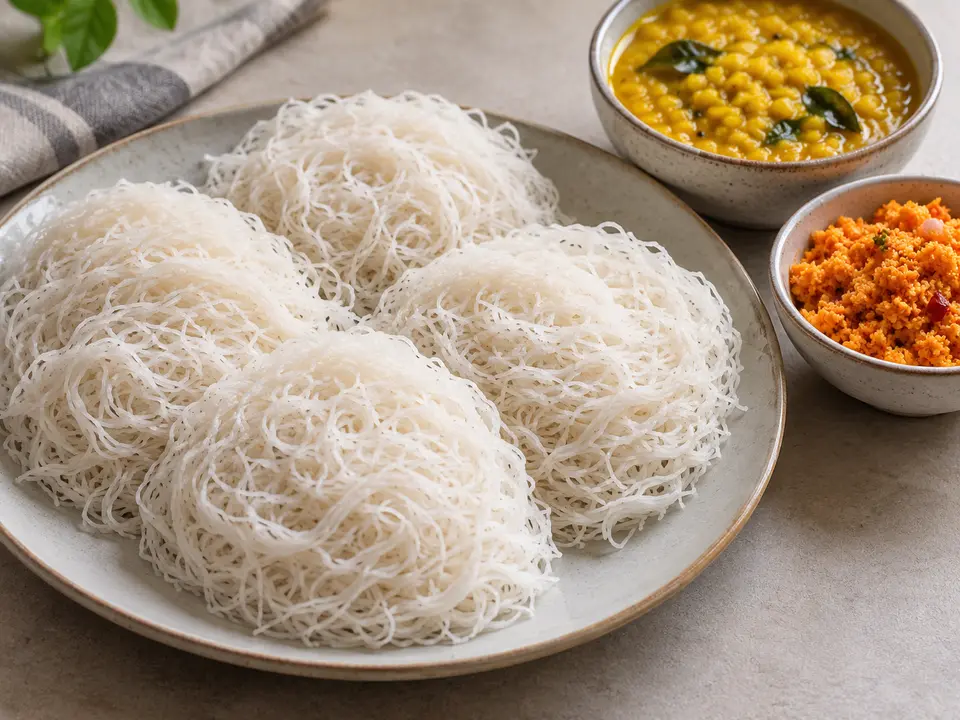
String Hoppers
Rice-flour dough formed into thin strands and steamed. Served with curry, coconut side dishes, etc. The shape is different from hoppers.
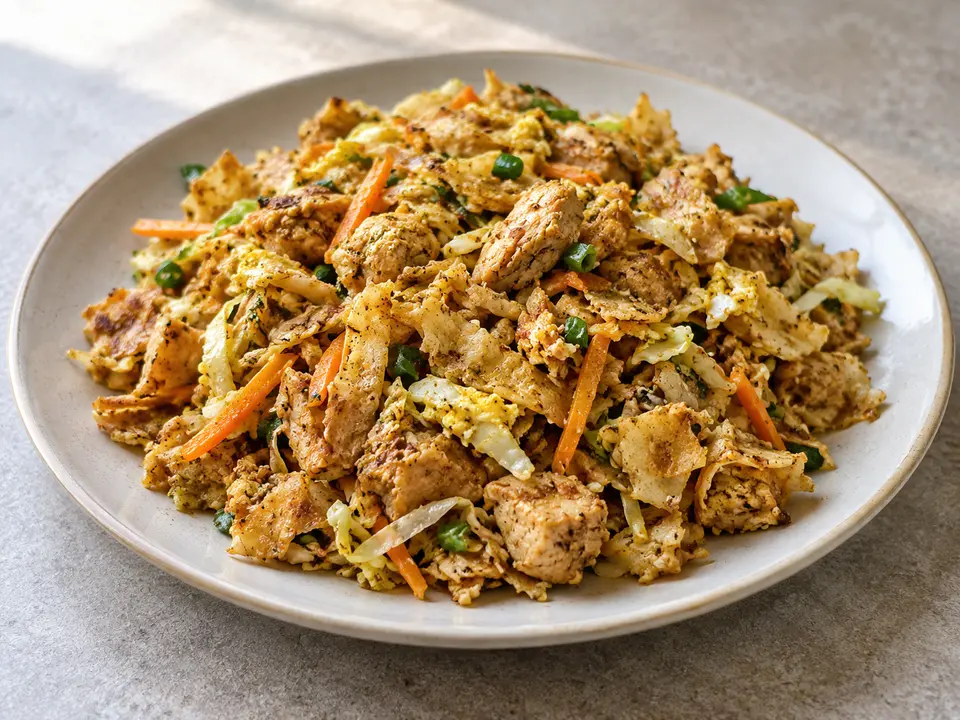
Kottu Roti
A dish made by chopping roti into small pieces and stir-frying it with vegetables, eggs, meat, etc. The photo includes chicken. Some versions use vegetables, fish, or cheese.
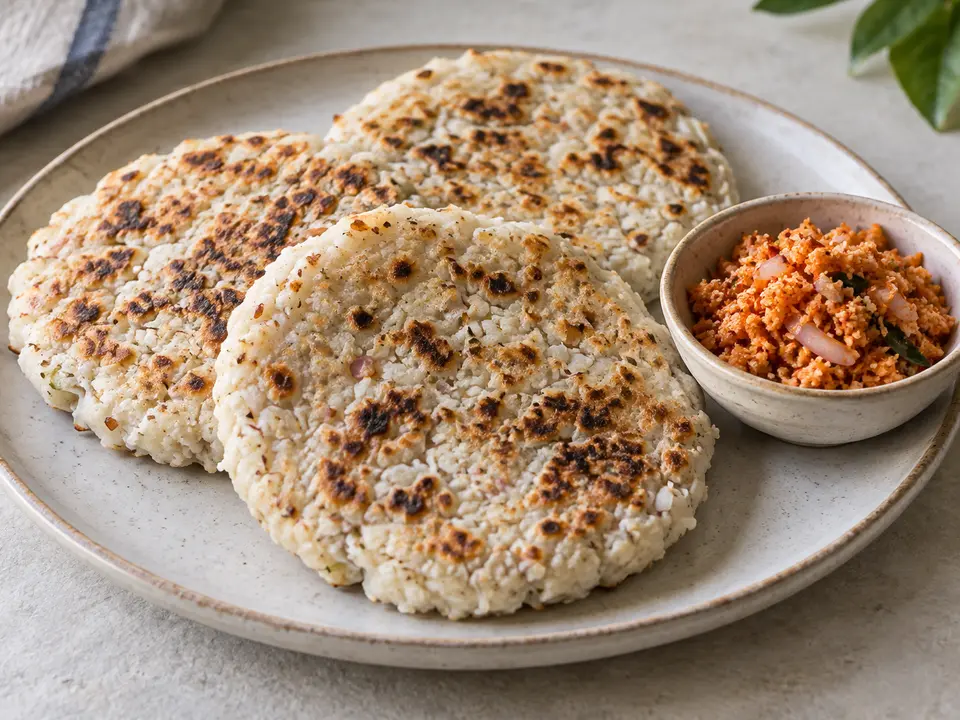
Pol Roti
A flatbread made by combining wheat flour or other flour with coconut and baking it. Eaten with curry, sambol, etc. Often eaten for breakfast or as a light meal.
Ingredients & Aroma Tips
Let's take a look at frequently used ingredients and seasonings.
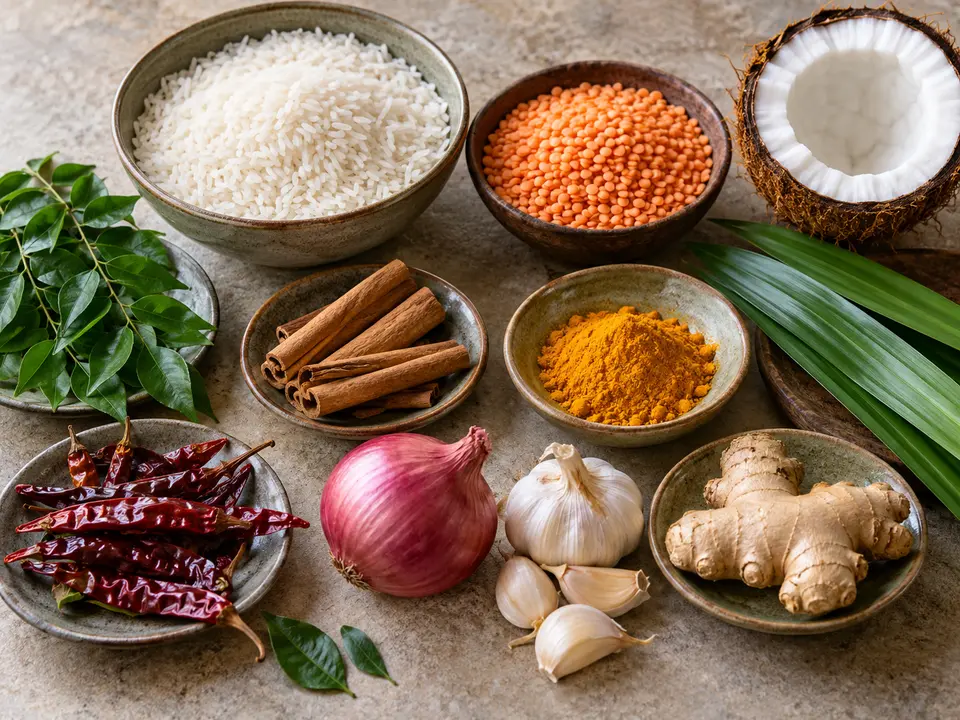
Ingredients & Spices
Rice, lentils, coconut, onions, etc. Curry leaves, pandan, cinnamon, chilies, and turmeric are also used in cooking.
Snacks, Sweets & Drinks
Familiar flavors to enjoy between meals.
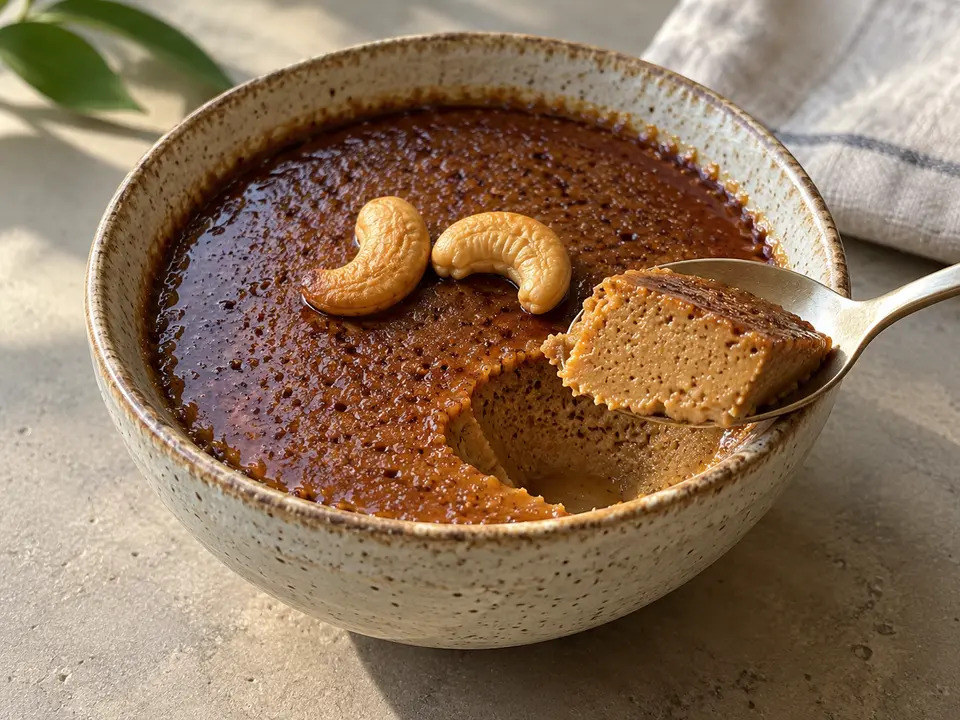
Watalappam
A pudding-like sweet made using coconut milk, eggs, sugar, etc. Some versions include spices, and the flavor and texture vary by restaurant.
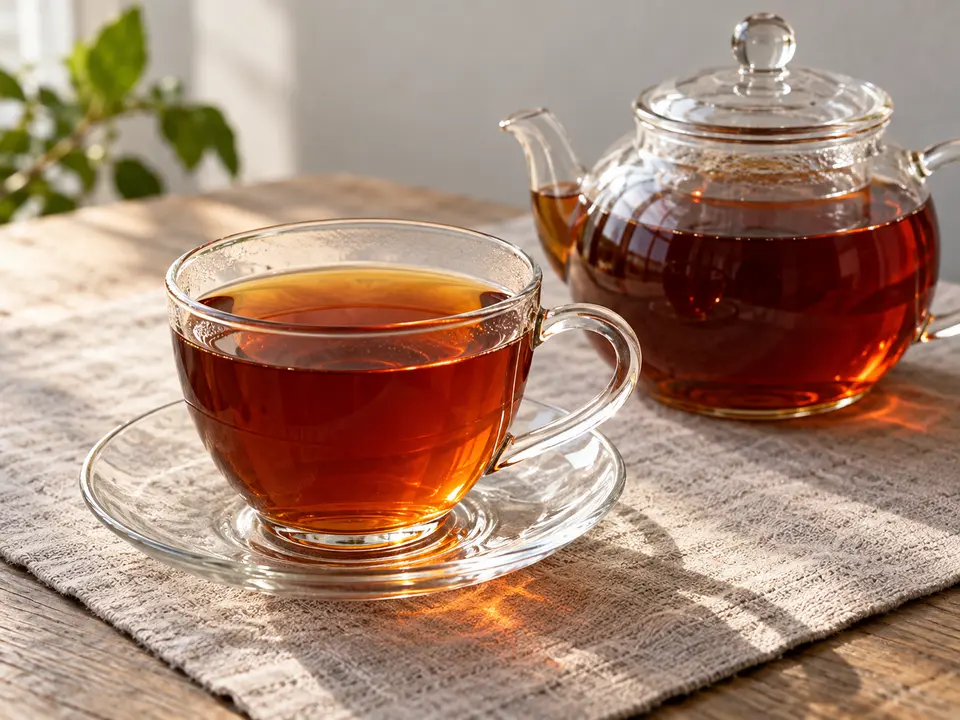
Black Tea
Sri Lanka is also known as a tea-producing region. The photo shows tea without milk. It can also be enjoyed with milk and sugar.
Choosing Your First Dish
Choose from Photos
Rice, noodles, and bread. Try choosing based on what you want to eat.
Ask About Flavors
If you are concerned about spiciness or sourness, feel free to ask at the restaurant.
Check the Ingredients
If there are any ingredients you do not eat, please check before ordering.
🕒 Breakfast, Lunch, and Dinner
Hoppers, string hoppers, rotis, and similar items are sometimes eaten for breakfast. Lunch and dinner typically feature staple foods paired with side dishes, such as rice and curry.
Kottu is also sometimes chosen for dinner. Eating times and contents vary depending on the region, family, and lifestyle.
🥄 Dining Tips for First-Time Diners
Another way to eat is by mixing the staple food and side dishes with your hand. Spoons and forks are also used; choose according to the restaurant and situation.
If you are a beginner, try starting with lentil curry, hoppers, roti, etc. Mix spicy side dishes in little by little, and feel free to ask about the spice level and ingredients before ordering.
🗺️ Regional & Cultural Differences
There are differences in the fish and vegetables used, depending on whether one is near the sea or inland. The food cultures of various ethnicities and religions intersect, creating a rich variety of dishes.
Even the same dish varies by region, family, and generation. Avoid assuming "everyone is the same" and enjoy each unique flavor.
🥬 Meat, Fish, Vegetables & Soups
There are dishes that use chicken, fish, shrimp, vegetables, lentils, etc. The meats consumed also vary by religion and family. Coconut sambol sometimes contains fish ingredients.
There are also lentil curries, dishes with broth, and soups. Please check with the restaurant regarding ingredients you do not eat or are concerned about. There are also light meals featuring bread stuffed with fish or other fillings.
Finding Sri Lankan Cuisine in Japan
Try searching for "Sri Lankan cuisine" or dish names combined with your local area name. Looking at menu photos or asking the restaurant about ingredients makes it easier to choose.
View Sri Lankan Restaurants