

CAMBODIA · FOOD & CULTURE
Discover Cambodian Cuisine
Explore Cambodian cuisine through photos, featuring rice, fish dishes, rice noodles, and the delightful aroma of herbs.
View Classic Dishes →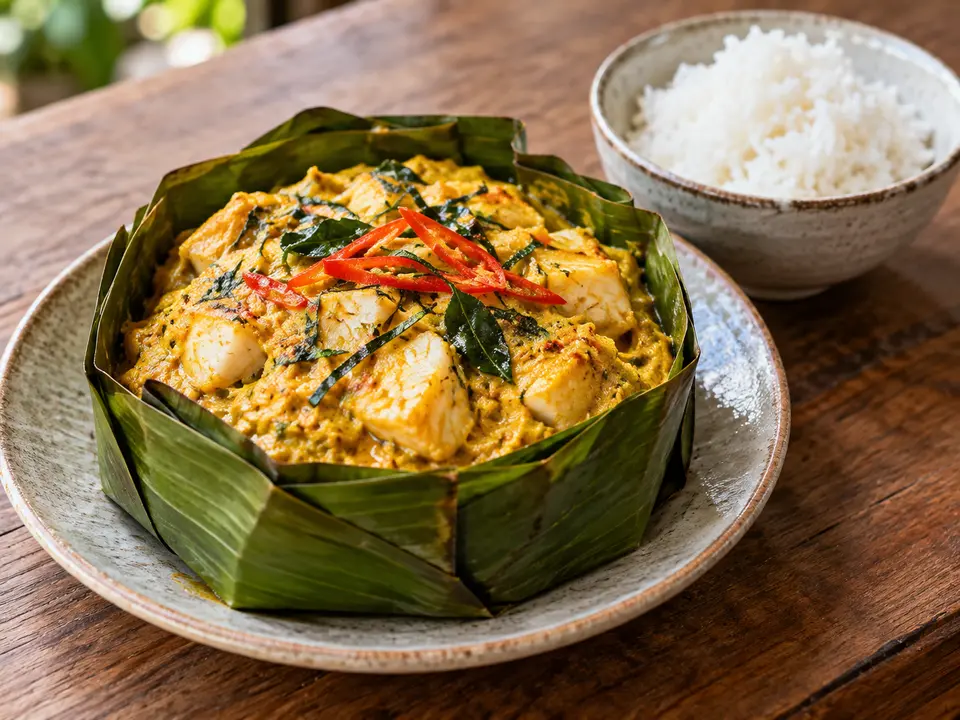
Classic Dishes and Staple Foods
Rice, noodles, and home-cooked meals. Choose what you want to eat from the photos.
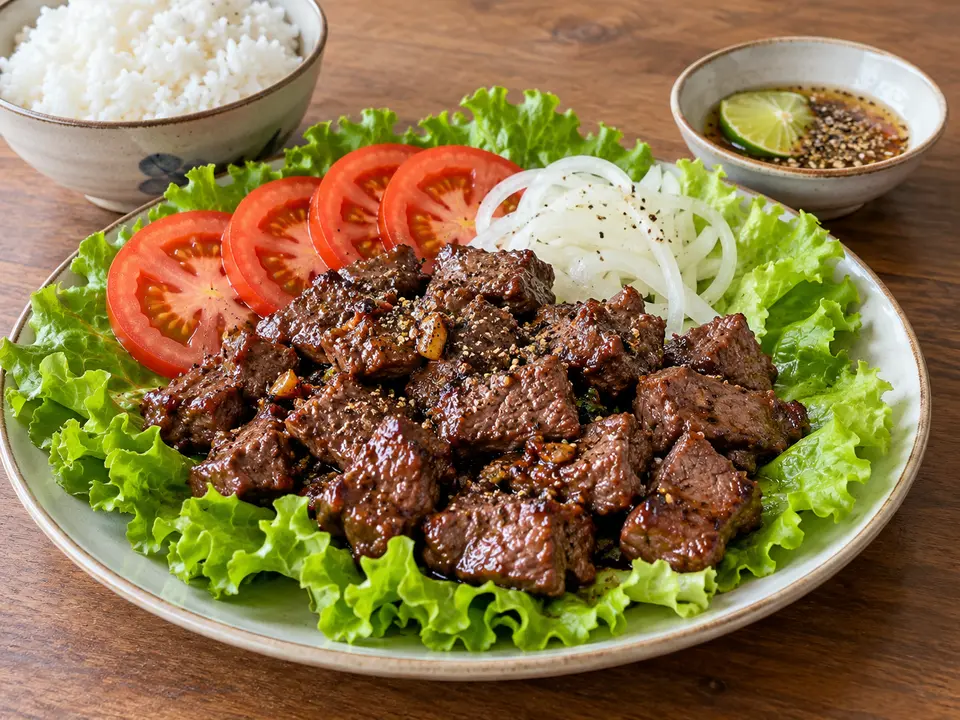
Lok Lak
A stir-fried dish typically made with beef and other ingredients. Served with vegetables, rice, and a dipping sauce made of black pepper and lime. Meat and seasoning vary by restaurant.
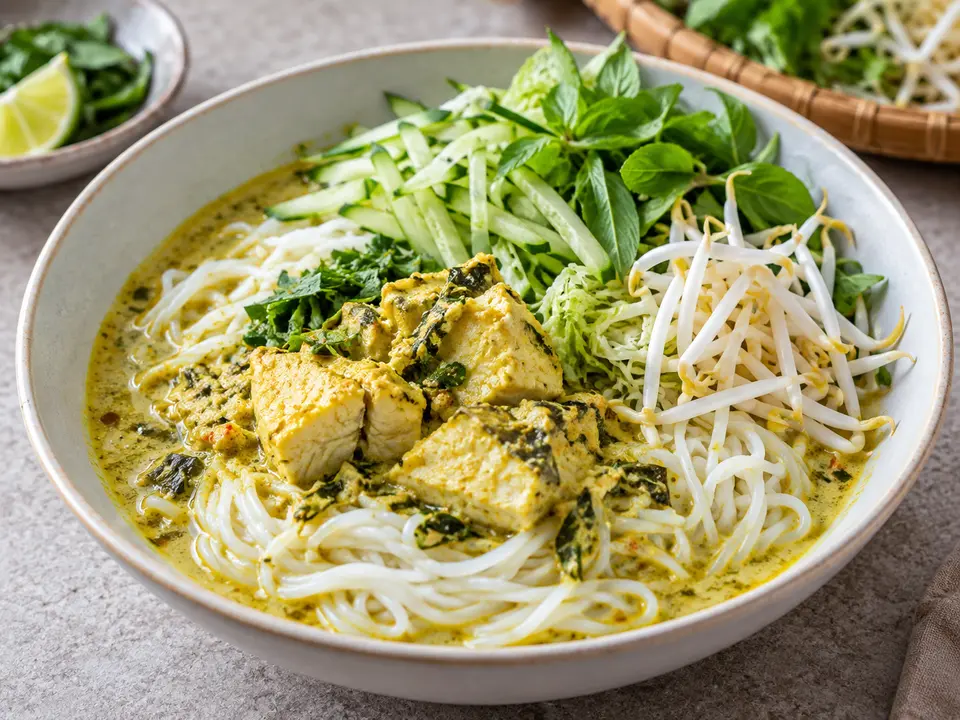
Num Banh Chok
A dish combining rice noodles with a fish-based soup, vegetables, and herbs. Often eaten for breakfast. Soups and ingredients vary by region.
Ingredients and Flavor Tips
Take a look at commonly used ingredients and seasonings.
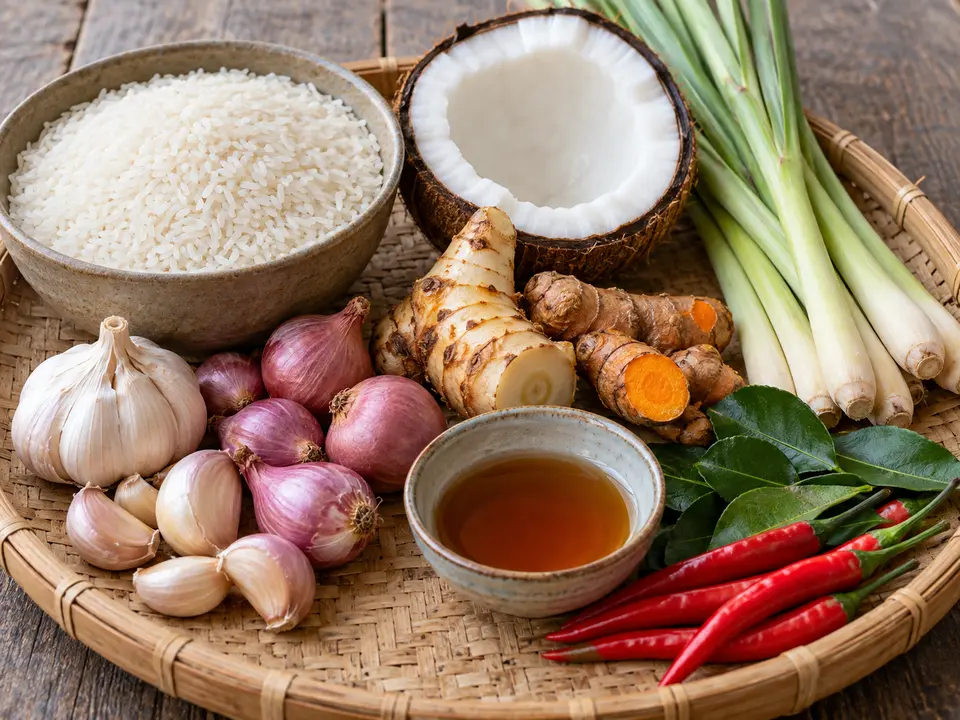
Ingredients, Herbs, and Seasonings
Rice, fish, vegetables, coconut, and more. Lemongrass, galangal, turmeric, garlic, and fish sauce are also used. Fermented fish seasoning is also common.
Snacks, Sweets, and Drinks
Familiar flavors to enjoy between meals.
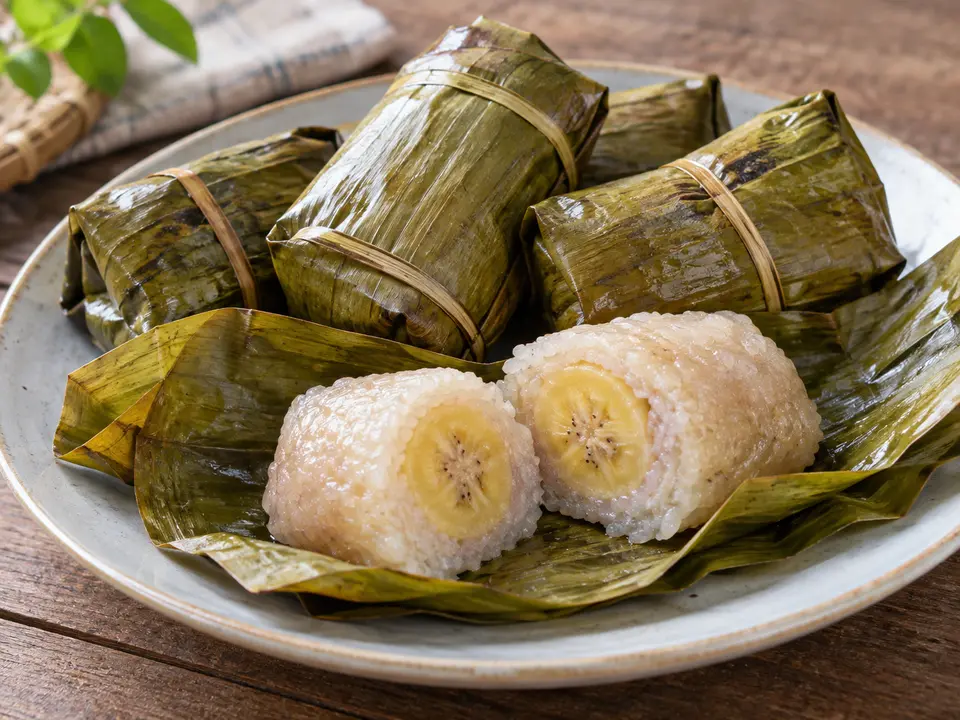
Banana and Glutinous Rice Treat
An example of a sweet treat made by wrapping bananas and glutinous rice in leaves and cooking them. Some versions use coconut, and shapes and ingredients vary widely.
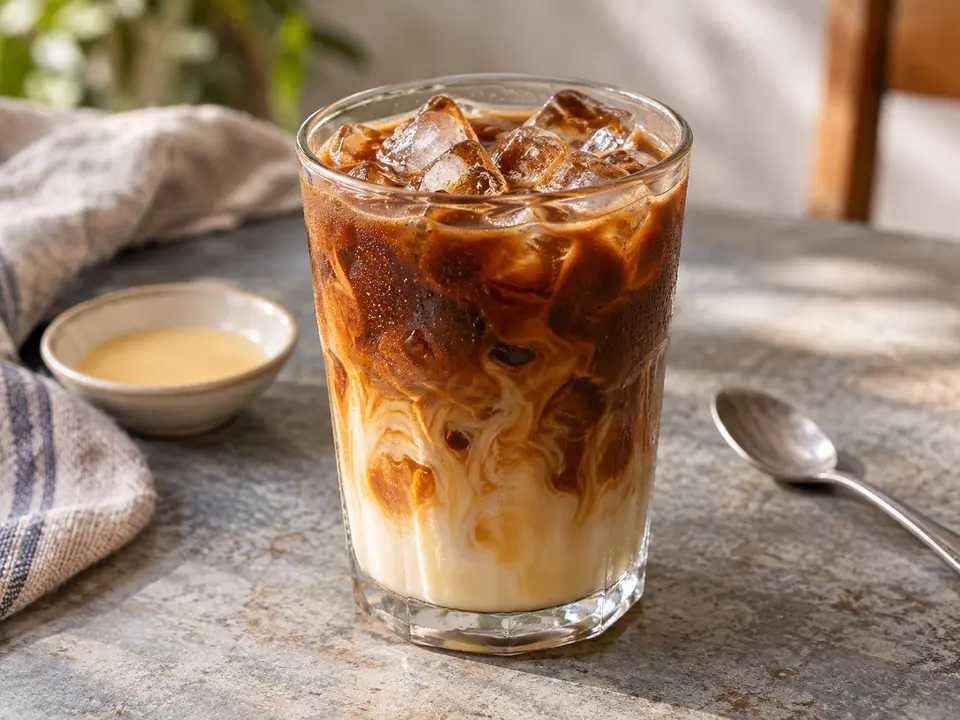
Coffee with Milk
The photo shows an example of coffee mixed with condensed milk and ice. Hot tea and fruit-based drinks are also available; sweetness and ingredients vary by restaurant.
Choosing Your First Dish
Choose by Photo
Rice, noodles, and bread. Choose based on what you feel like eating.
Ask About Seasoning
If you are concerned about spiciness or sourness, feel free to ask at the restaurant.
Check the Ingredients
If there are any ingredients you cannot eat, check with the staff before ordering.
🕒 Breakfast, Lunch, and Dinner
Rice noodle dishes or rice meals are sometimes eaten for breakfast. Lunch and dinner often feature rice accompanied by fish, meat, vegetable side dishes, and soup.
Meal times and contents vary depending on the household and lifestyle.
🥄 Dining Tips for First-Time Diners
Use appropriate tableware, such as spoons for rice and chopsticks for noodles. Try sauces and condiments a little at a time.
First-timers should start with Amok or Lok Lak. Fish seasoning, spiciness, and ingredients you wish to avoid can be checked with the restaurant before ordering.
🗺️ Regional and Cultural Differences
Dishes vary based on regional ingredients, such as freshwater fish from rivers and lakes versus seafood from the coast. There is also culinary exchange with neighboring countries.
Differences also exist among ethnicities, religions, families, and generations. Avoid assuming there is only one 'correct' way to eat, and enjoy a variety of dishes.
🥬 Meat, Fish, Vegetables, and Soups
Uses fish, chicken, pork, beef, vegetables, and more. Even vegetable side dishes may contain fish sauce.
There are also noodle soups like Kuy Teav and other soups. Light meals featuring bread are also available, so it's not exclusively rice-based dishes.
Finding Cambodian Food in Japan
Try searching for 'Cambodian cuisine' or specific dish names combined with your local area. Looking at menu photos or asking the restaurant about ingredients makes it easier to choose.
Restaurant listings for this cuisine will appear here when they are added to HAPI-JOB Gourmet.